Blog

By Nick Gunady, CEO, Aerovy
Last week I joined Tom Nguyen, VP of Business Development at Inventus Power, on the Future of Electrification web event. The through-line was simple. Electrification is forcing connectivity into every OEM. The latent battery data already sitting inside those ecosystems is the highest-leverage signal stream most fleets have. Almost none of them can act on it.
This post is the written version of what we said live, with the math behind the claims.
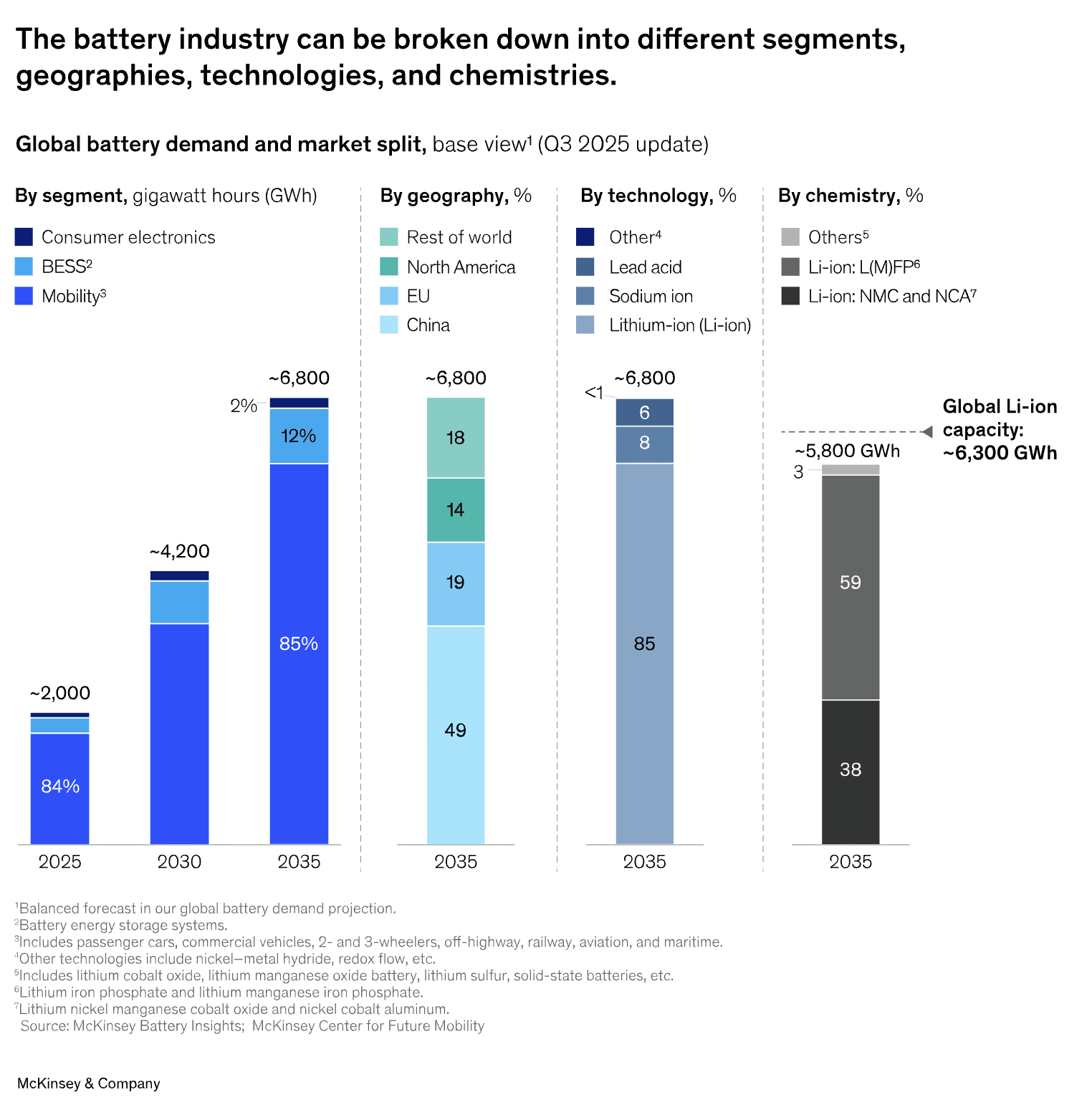
Electrification is ramping up, and connectivity follows
Batteries are the core of every electrified system. As electrification ramps, battery data ramps with it. Unlike the secondary sensors bolted onto an internal combustion engine, battery data flows directly off the BMS or motor controller. Cleaner, denser, continuous.
Connectivity is no longer the question. The data exists. The real question is whether OEMs can turn it into operational outcomes. Uptime, service margin, warranty cost, customer experience. Before competitors do. For most OEMs, the answer today is no. Not because they lack data. Because they lack a closed loop.
The 204-hour problem
Here is the number that gets attention. A real fleet issue used to take 204 hours from notice to resolved fix. Operator emails support. Support requests data. A contractor gets dispatched. A truck rolls. Eventually, a firmware fix ships.With a closed-loop system between connectivity, OTA, and battery intelligence, the same issue now takes 56 hours.
The savings do not come from working faster. They come from removing steps. This post walks through what changed, what battery data unlocks once you can act on it, and how to start.
Connectivity was the easy part
Between 2015 and 2020, OEMs invested heavily in the connected stack. Sensors were embedded into new platforms. Telematics standardized. Dashboards launched. Data volumes exploded.
The reality on the ground was different. Data was reviewed reactively. Datasets stayed fragmented. Alerts arrived without context. Visibility increased. Downtime did not. Talk to operators today and you hear the same lines:
"We knew it was happening but did not know what to do."
"We found it too late."
"It took weeks to roll out the fix."
Connectivity, on its own, is not a business outcome. A large dataset does not move the metrics any leadership team actually tracks.
Three things turn connectivity into performance: OTA as the action layer, battery intelligence as the signal layer, and a unified operating layer that ties both to the rest of the business.
Data without a closed loop is overhead. A closed loop fields the data, processes it into a decision, and executes the response. That last step is where most OEM stacks fall apart.
What a closed loop actually looks like
OTA is often described as remote software updates. That undersells it. OTA is the action layer that closes the loop between a detected signal and a deployed fix.
A working closed loop runs in six steps:
Continuous monitoring of fleet and battery telemetry
Automated flagging of anomalies, with engineering context attached
Engineering investigation against historical fleet behavior
Firmware build uploaded to the cloud
Staged rollout with operator confirmation
Post-deployment monitoring to confirm the fix held
Run that loop, and the 204-hour timeline collapses to 56 hours. The breakdown:
100% reduction on escalation time. The operator never files a ticket. The system already flagged the issue with context.
35% reduction on diagnostics. Engineering walks into the session with enriched data, not a blank page.
92% reduction on fix shipping. Firmware reaches the fleet through a staged OTA rollout. No contractor schedule, no truck roll.
Compressing those steps requires guardrails most OEMs underinvest in. Version control. Rollout policies. Operator confirmation. Auditability. The savings are real, but only if the rails are in place.
Battery data is the layer most OEMs are leaving on the table
Most OEMs are not battery companies. They build vehicles, machines, and equipment. Battery data shows up on their dashboards as a single SOC percentage, maybe a temperature reading. End of story.
That gap is the opportunity.Battery data is rich, noisy, and easy to misinterpret without domain expertise. That is exactly why it is so undermonetized. The signal is there. The translation is not.
The translation looks like this:
Signal in the data | Insight | OEM outcome |
|---|---|---|
Overcharge events and thermal stress | Cell aging accelerated; warranty exposure rising | Warranty reserve, fleet-level recall avoidance |
Charging at low ambient temperature | Lithium plating risk on specific assets | Targeted operator guidance; pack replacement avoided |
Abnormal discharge spikes | Operator behavior or fault precursor | Service ticket created proactively |
Calendar life degradation drift | Asset retirement curve different from spec | Residual value modeling, fleet rotation |
SOC drift across identical assets | Sensor calibration or pack imbalance | Fleet-level service prioritization |
Idle-at-0% patterns | Operator habit driving early failure | Training, contract terms, or pricing change |
High regen current in service | Drivetrain or controller stress | Predictive maintenance trigger |
Two examples from the conversation made this concrete.
The hospital cart sticker problem. Many fleets still rotate batteries on a static schedule printed on a sticker. The sticker is wrong in both directions. Some packs get replaced months early. Pure cost. Others fail mid-shift in a hospital corridor. Pure risk. Static schedules are a proxy for missing intelligence.
Identical fleet vehicles, different outcomes. Two assets leave the factory the same week with the same pack. Three years later, one is at 92% capacity and the other is at 71%. The hardware did not diverge. Usage, environment, and charging behavior did. Without a battery intelligence layer, the OEM cannot see that. Let alone act on it.
This is the layer most OEMs already have access to and are not capturing.
From proactive to autonomous, and how to start
The arc moves in three stages:
Reactive. Alerts fire, humans triage, fixes ship in weeks. Most OEM service organizations live here.
Proactive. The system predicts, prioritizes, and recommends. It coordinates parts and dispatch. Humans make the call. This is where the closed-loop stack pays off first.
Autonomous. Capabilities act inside guardrails and escalate when they should. A Fault Capability detects and enriches. A Reporting Capability files the warranty claim. A Service Coordination Capability books the technician with the right part. Engineering and ops own the policy. The system runs the workflow.
Getting there is not a platform replatform. It is a focused pilot. The four-step framework we use:
Unify field and system data. Bring battery telemetry, machine telemetry, and the relevant enterprise context (CRM, ERP, dealer, service history) into a single operational layer.
Translate signals into decisions. Map the signal-to-outcome table above to the specific failure modes and warranty exposures that matter for your fleet.
Execute safely and efficiently. Wire OTA, work order generation, and parts coordination into the loop with the right guardrails.
Iterate and improve. Pick the metrics that matter (uptime, cost per incident, response time, warranty leakage) and improve against them every cycle.
The advice we gave on the call still stands. Pick one fleet or one segment. Define the success metrics. Prove closed-loop impact in weeks, not quarters. The point of the pilot is to make the math undeniable before the platform conversation starts.
In conclusion
Most OEMs already have the connectivity. What's missing is the layer that turns data into decisions, and decisions into deployed action: automatically, continuously, with guardrails. That's the closed loop. That's what moves a fleet from reactive to adaptive.
This is the work Inventus and Aerovy are doing together. Inventus on the battery domain. Cell chemistry, pack architecture, BMS, the failure modes that actually matter. Aerovy on the operating layer: data unification, workflow execution, and the autonomous capabilities that move a signal to an outcome without a human in every step.
Nick Gunady is CEO of Aerovy, the AI operating layer for connected hardware companies. Tom Nguyen is VP of Business Development at Inventus Power.